Launch offer — valid today only

📄 Digital book in PDF · read it on your phone or print it

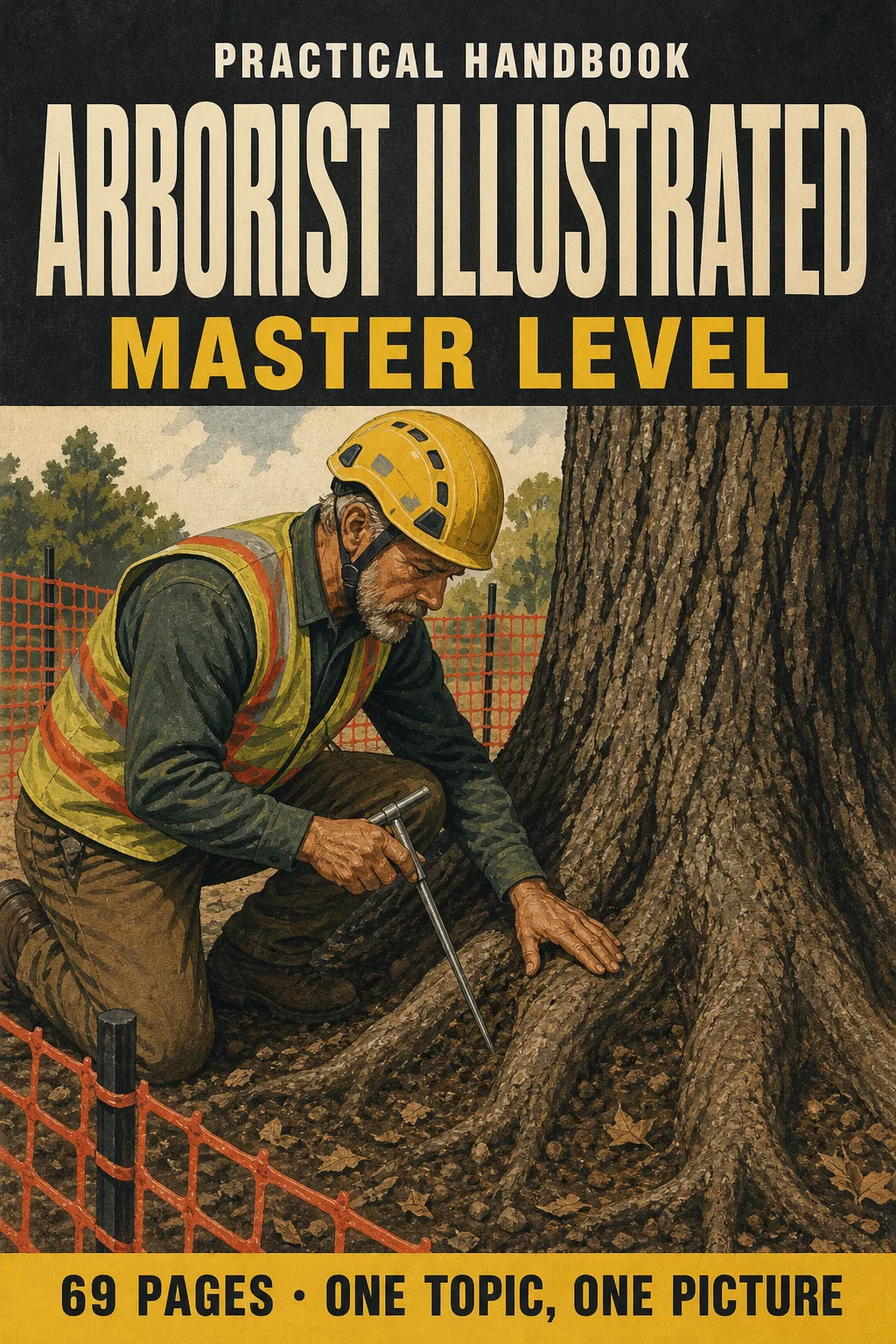
Master-Level Arborist Exam Prep in Drawings: CODIT, Roots, Risk and Specs You Can Explain on Site One Topic on Every Page

CODIT and decay, roots and soil science, the 5-step diagnosis, risk assessment, tree protection zones, pruning specs and arborist reports. Each topic gets its own page: the drawing first, then what you need to remember. 69 illustrated pages.

START STUDYING THIS WAY

🔒 Secure checkout · PDF by email · 30-day guarantee

Every topic, its own pageEach concept drawn, with the explanation right beside it
69 illustrated pages9 parts, from how a tree really works to the exam-day review
Up-to-date sourcesANSI A300 (2023), ANSI Z133 and ISA Best Management Practices, each cited by edition
PDF by emailFormat

Look Inside the Book

Every page has one big drawing and a box with the numbers, steps and rules you need to know:

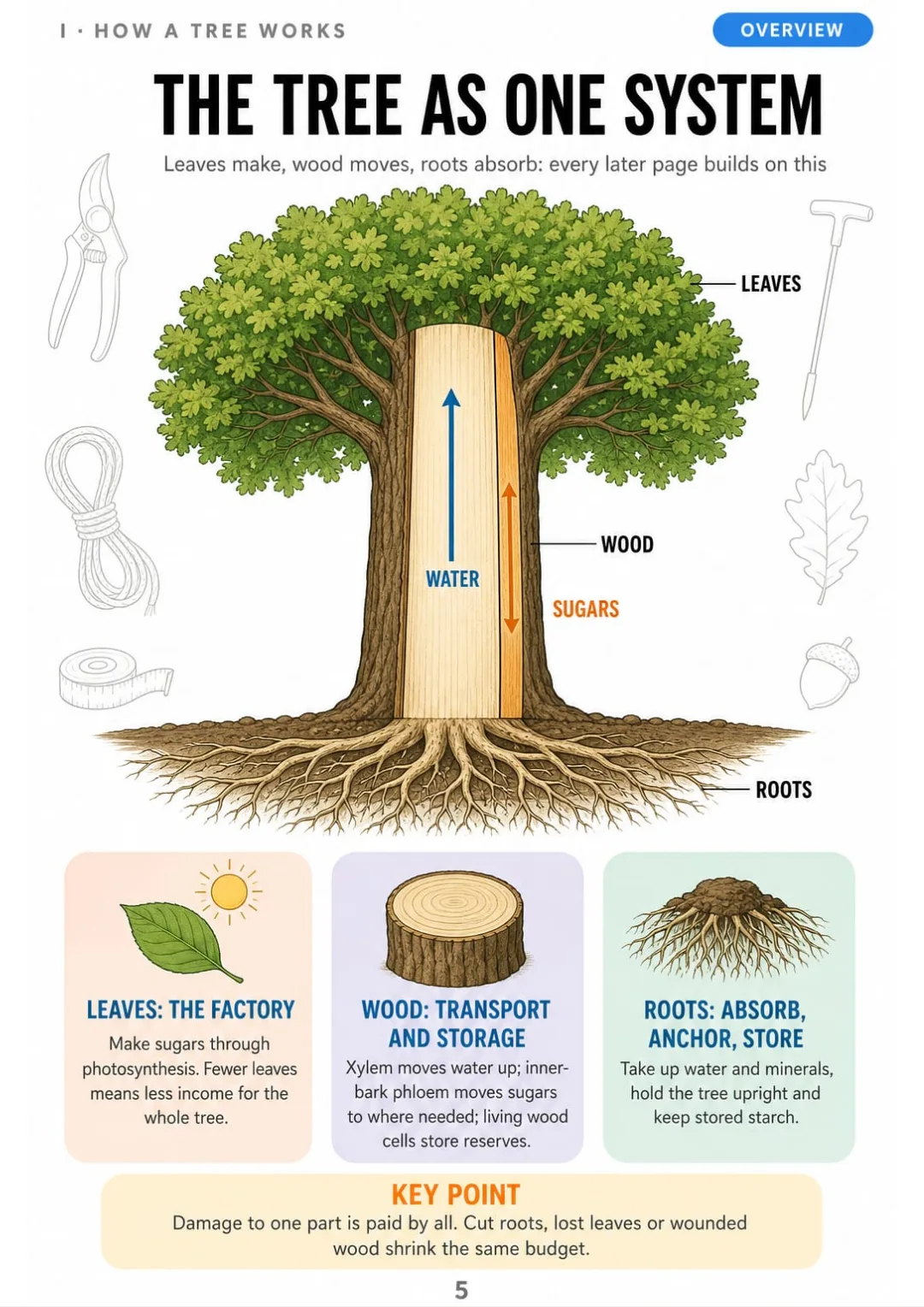
Leaves make sugars, wood moves water and reserves, roots absorb, anchor and store.
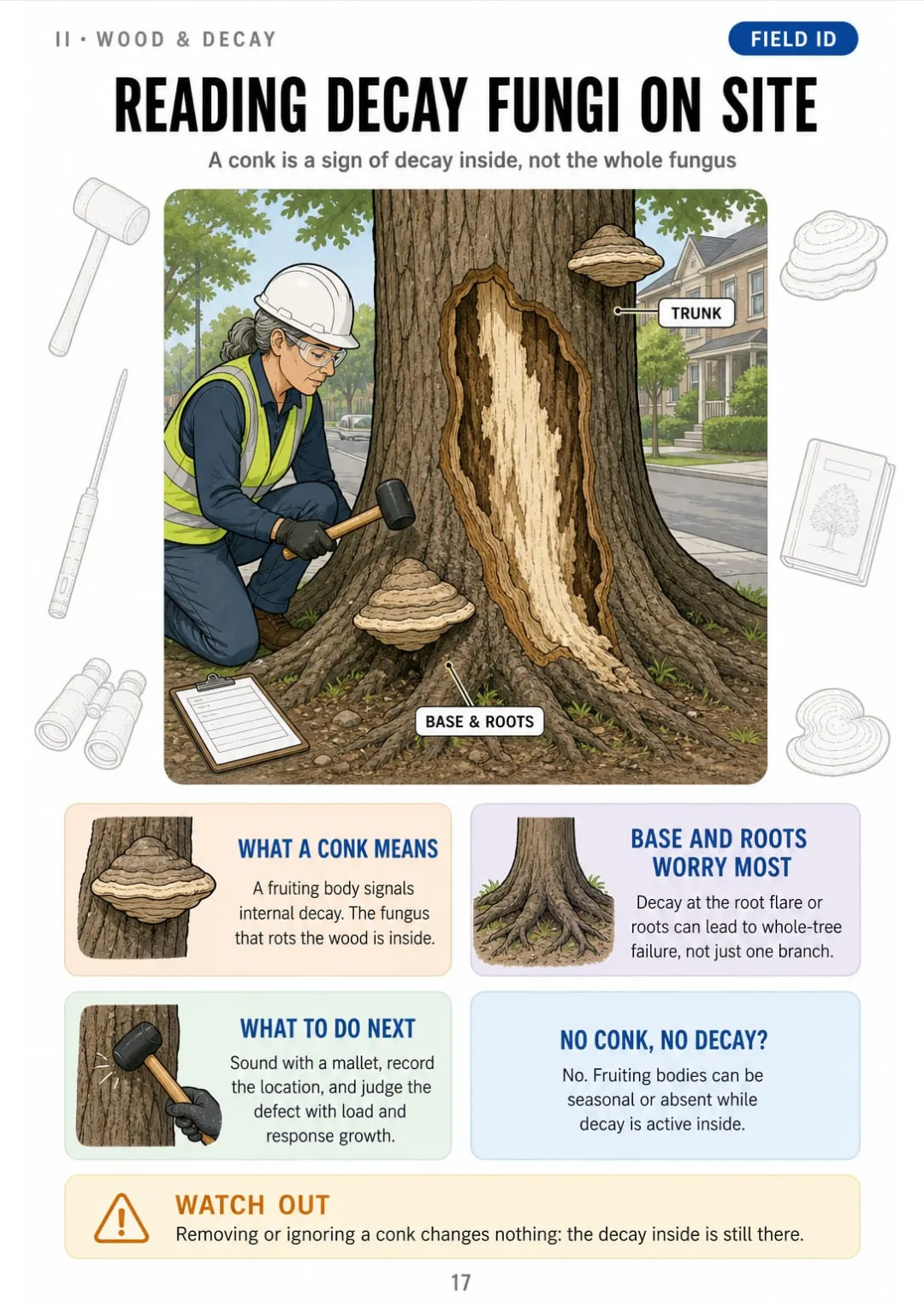
Conks at the base and roots point to internal decay that can affect the whole tree.
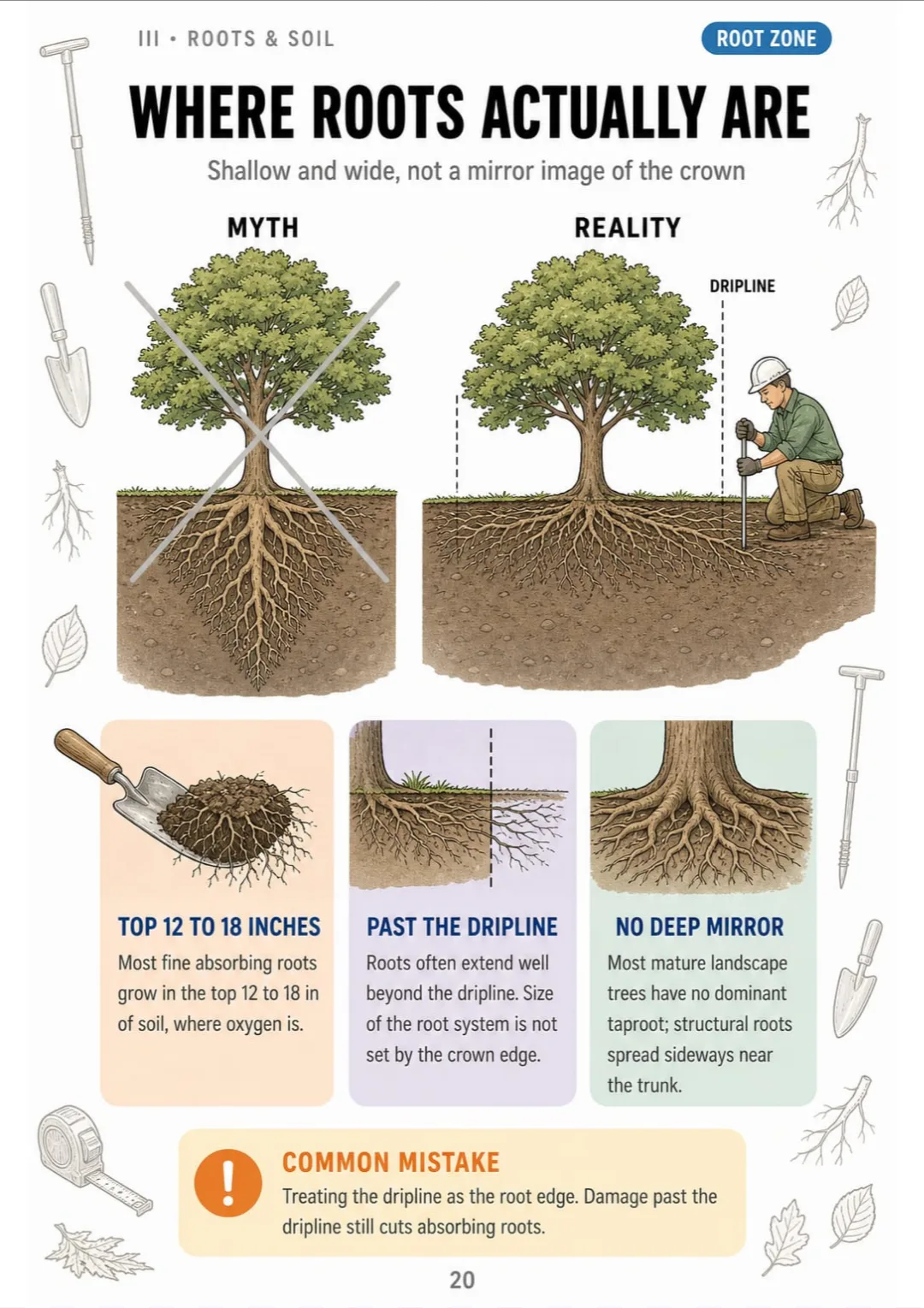
Most fine roots sit in the top 12–18 in of soil and spread past the dripline.
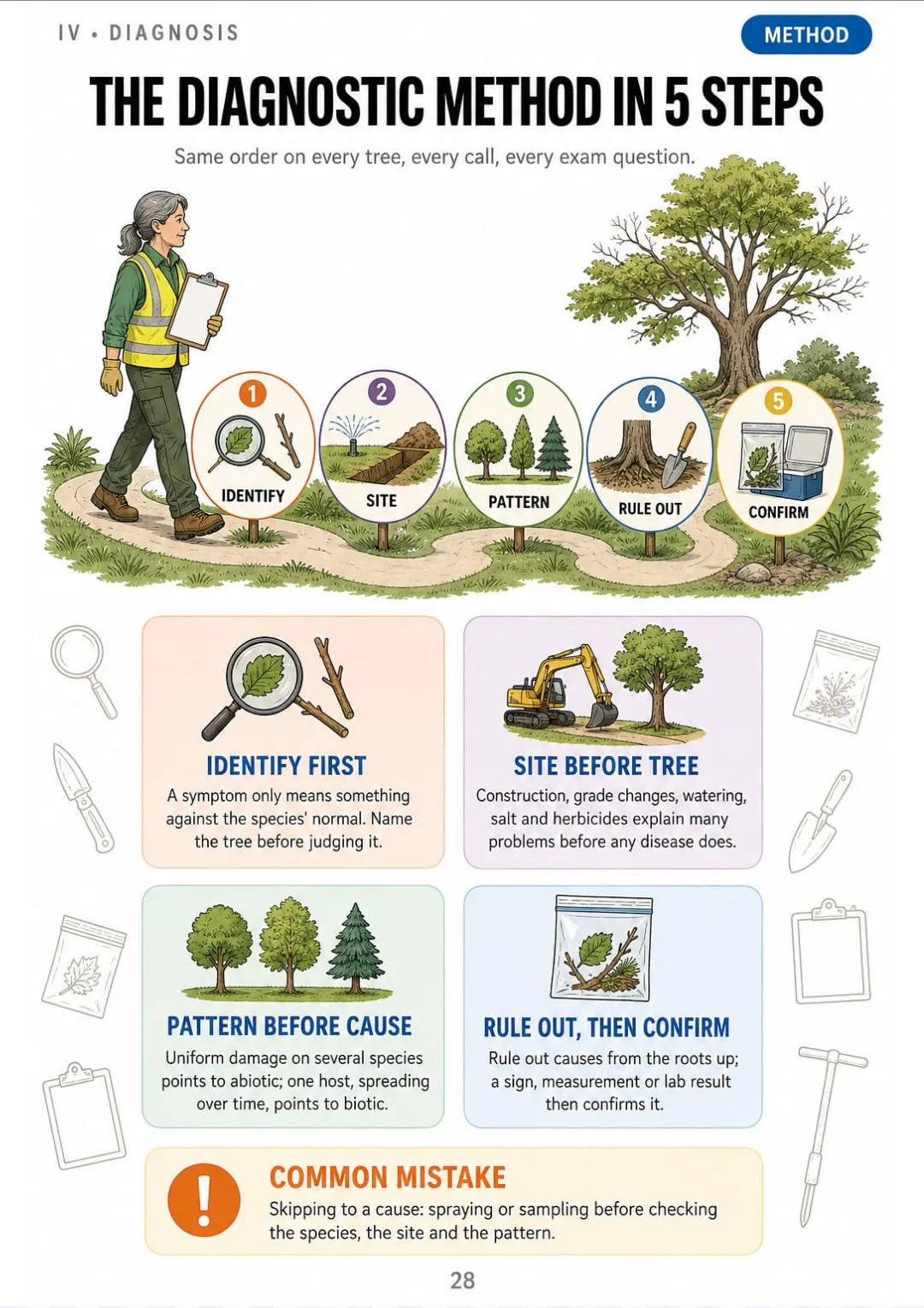
Identify, site, pattern, rule out, confirm: the 5-step diagnostic method used across the chapter.
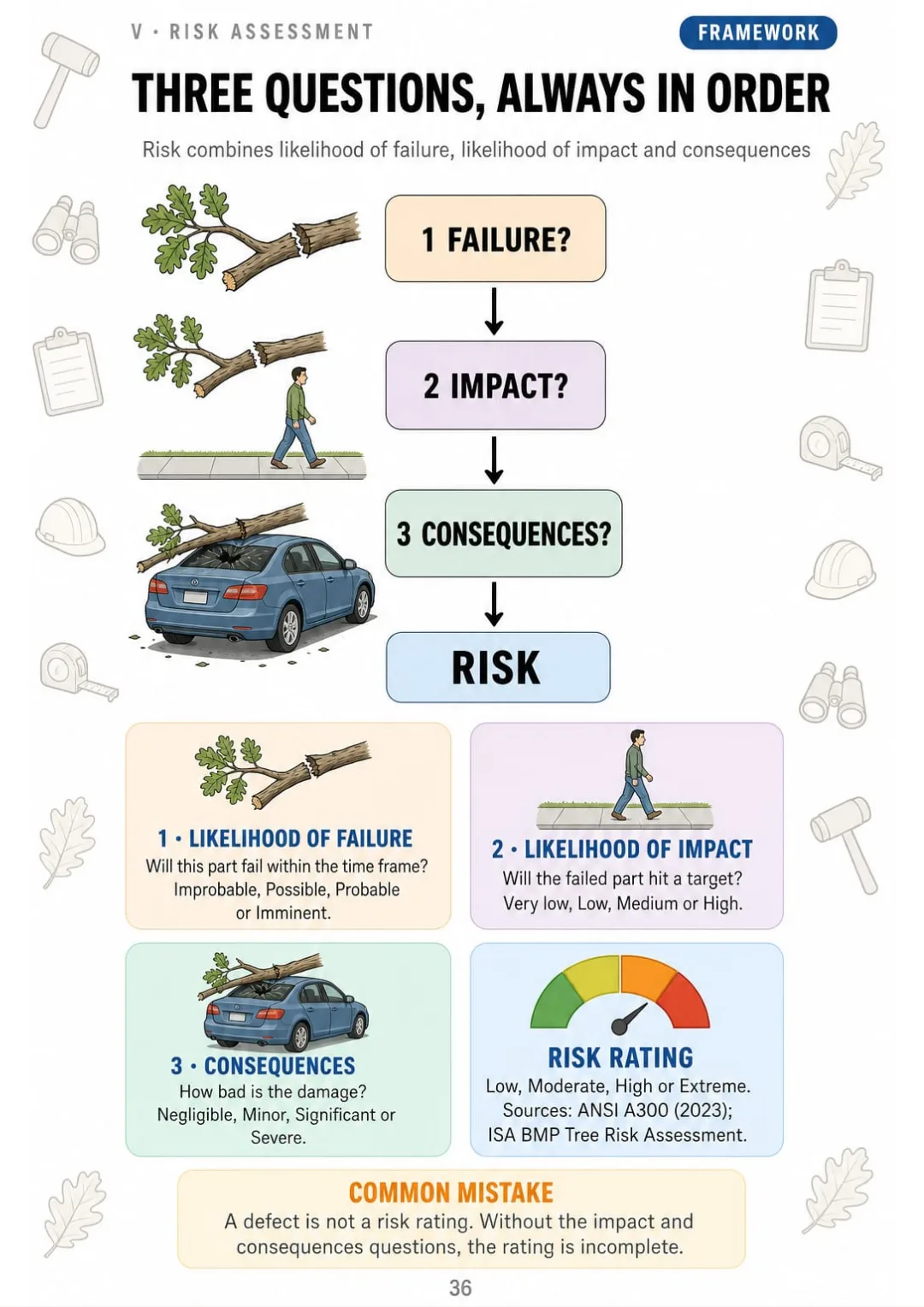
Failure → impact → consequences → risk: the three questions every rating answers, in order.
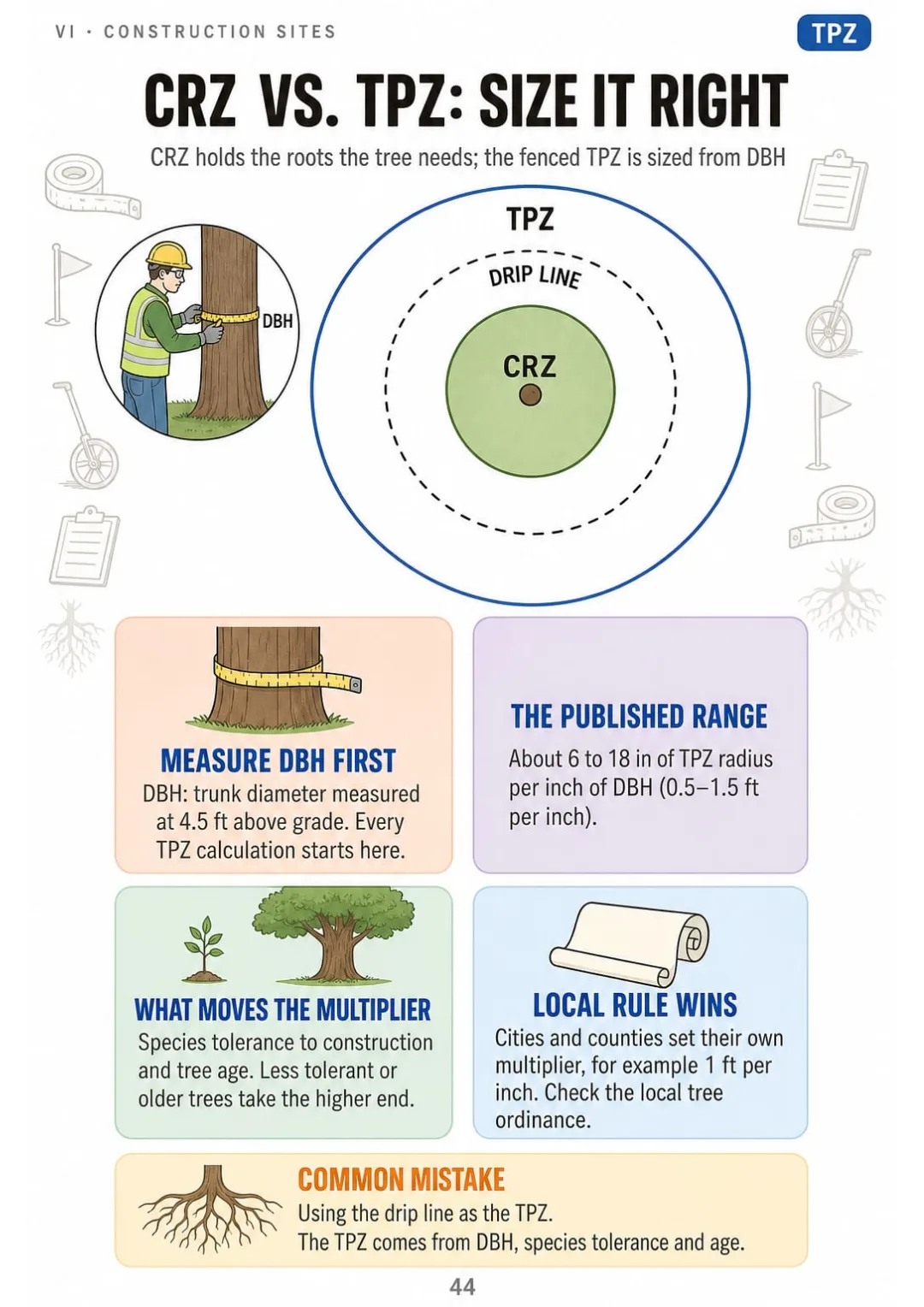
TPZ radius: about 6–18 in (0.5–1.5 ft) per inch of DBH, then check the local ordinance.
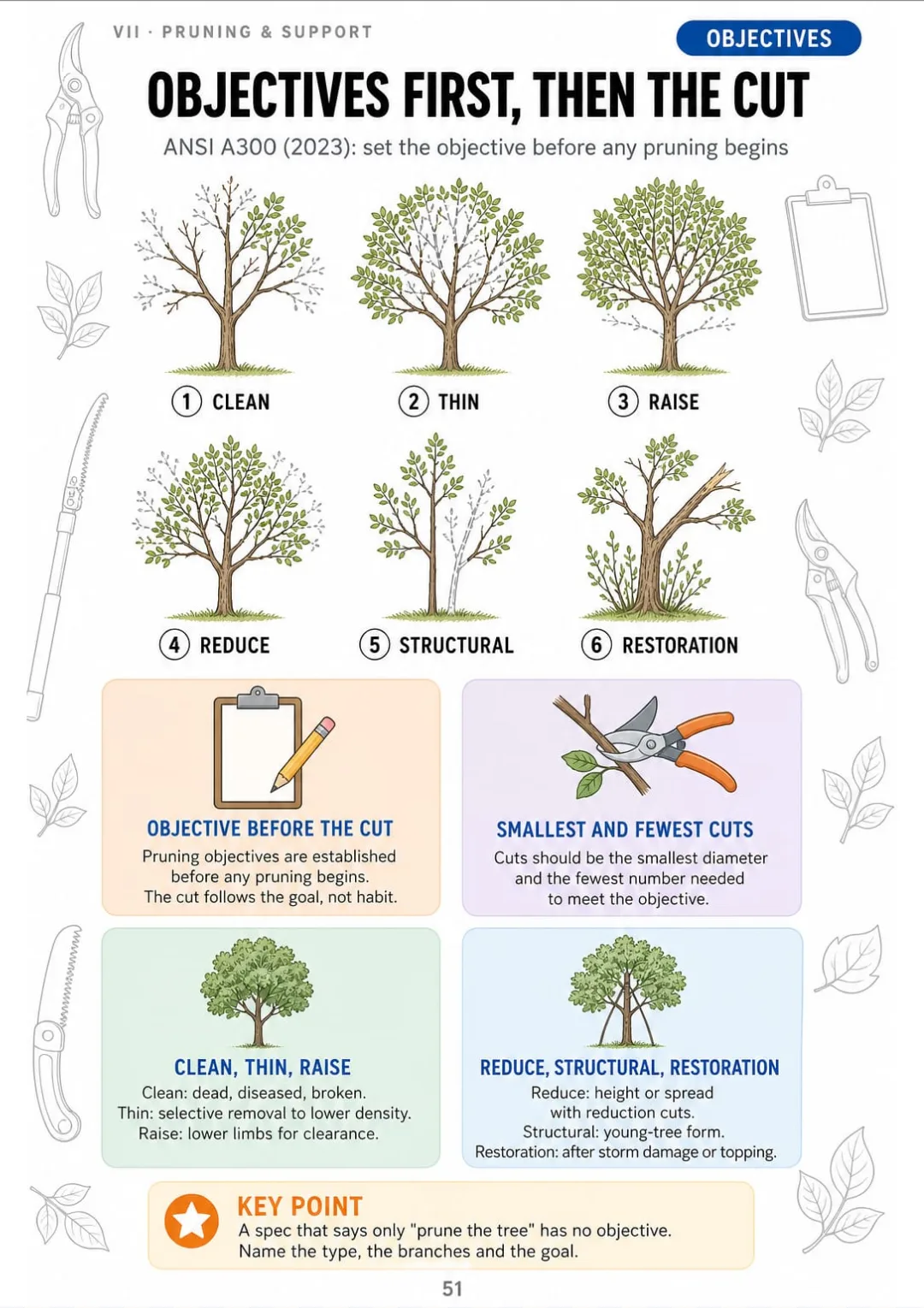
ANSI A300 (2023): define the objective first, then the smallest and fewest cuts.
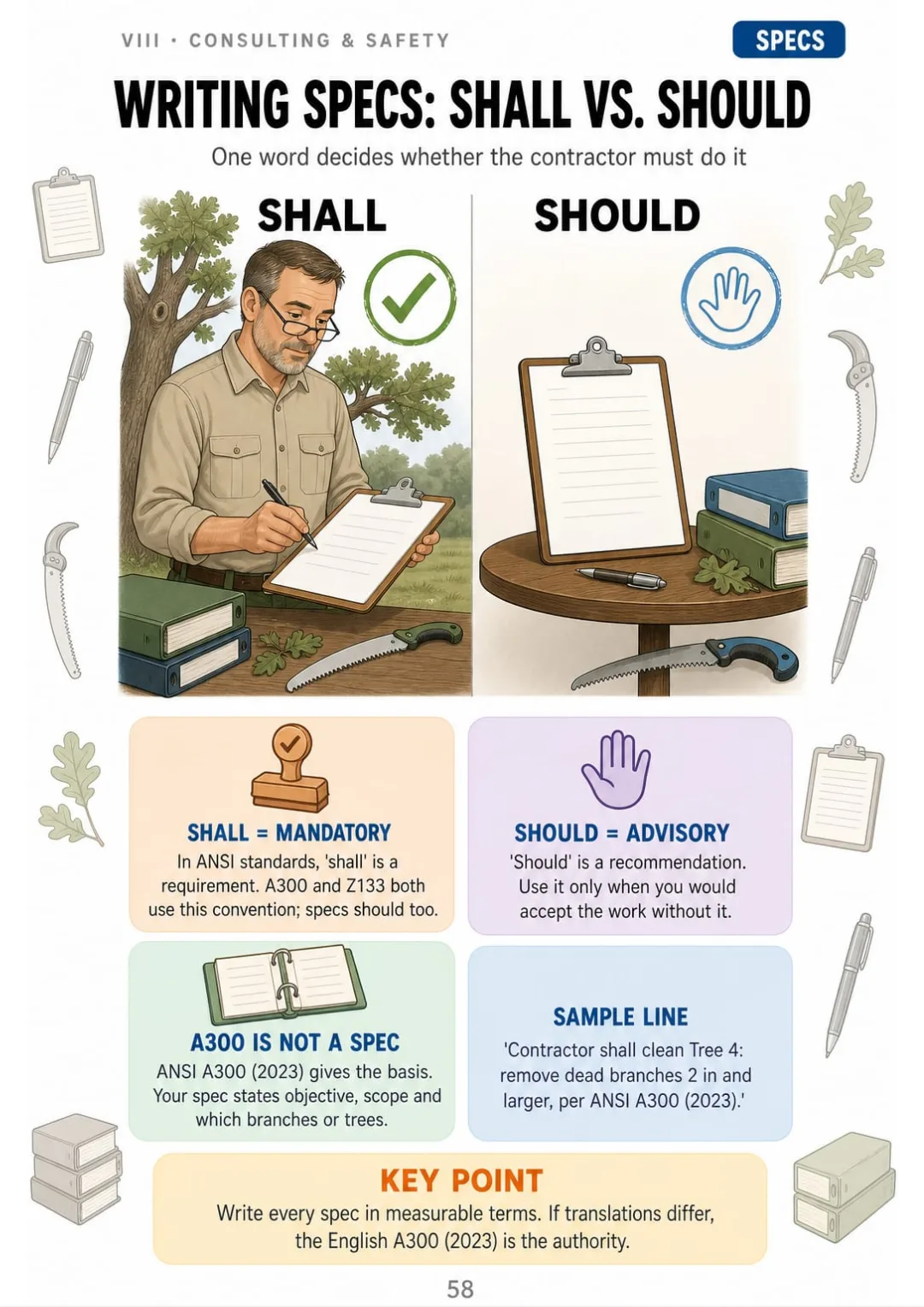
'Shall' is mandatory, 'should' is advisory: specs built on ANSI A300 (2023).

Swipe to see more →

These are real pages from the book. The table of contents is the full one: 9 parts and 65 topics.

The Problem Isn't You. It's How It Was Explained to You.

You're at the site trailer and the contractor wants to know where the excavator can't dig. You know the roots are out there. Now you have to say how deep and how far.

The textbook covers root distribution in page after page of prose: absorbing roots, lateral spread, soil oxygen. You read it at night after a full day in the field, and by morning it's gone.

Most fine roots sit in the top 12–18 in of soil and spread past the dripline.

In this book, roots get one page. A cutaway of the tree and the soil, with most fine roots in the top 12–18 inches, spreading well past the dripline, all labeled so you see it in one look.

Same with CODIT's four walls, the soil texture triangle, the two risk matrices, the TPZ and shall vs. should: each one has its own page.

You understand it, and you explain it on site without going back to the textbook.

COMPARE FOR YOURSELF

Same Topic, Two Ways to Study It

THIS
  • The textbook: line after line
  • CODIT's four walls explained only in words
  • You walk into the exam with doubts
Compartmentalization of decay in trees (CODIT) describes the boundary-setting response that follows wounding. Wall 1 resists vertical spread through the plugging of vessels and tracheids and is the weakest of the boundaries. Wall 2 resists inward radial spread and is associated with the latewood of the growth rings. Wall 3 resists tangential spread through the ray parenchyma. Wall 4, the barrier zone, is formed by the cambium after injury, separating the wood present at the time of wounding from wood formed subsequently, and constitutes the strongest boundary.
FOR THIS
  • CODIT's four walls in one drawing
  • The key facts in a box
  • You see it and you get it
Conks at the base and roots point to internal decay that can affect the whole tree.
CONTENTS

Take a Look at the 9 Parts and 65 Topics

Tree biology, wood and decay, roots and soil, diagnosis, risk assessment, trees on construction sites, pruning and support specs, consulting and safety, and the exam-day review: 69 pages, all illustrated.

IHow a Tree Really Works · pp. 5-12
  1. The Tree as a Whole: Leaves, Wood, Roots in One Drawing
  2. Photosynthesis vs. Respiration: The Energy Budget
  3. Water Movement: Cohesion-Tension in One Picture
  4. Carbohydrate Storage: Where the Tree Keeps Its Savings
  5. Growth Regulators: Auxin, Cytokinin and Apical Dominance
  6. Primary vs. Secondary Growth: Cambium, Sapwood, Heartwood
  7. Ring-Porous, Diffuse-Porous and Conifers
  8. Tree Stress Responses: Drought, Heat, Flooding
IIWood, Wounds and Decay · pp. 13-19
  1. CODIT: The Four Walls Drawn in the Trunk
  2. Branch Collar and Branch Bark Ridge
  3. Wound Closure vs. Healing: What Woundwood Does
  4. Brown Rot, White Rot, Soft Rot
  5. Reading Decay Fungi on Site
  6. Response Growth and Reaction Wood
  7. Codominant Stems and Included Bark
IIIRoots and Soil Science · pp. 20-27
  1. Where Roots Actually Are
  2. Root Functions and Mycorrhizae
  3. Soil Texture: The Triangle Made Simple
  4. Soil Structure, Bulk Density and Compaction
  5. Soil Water: Field Capacity, Wilting Point, Available Water
  6. pH and Nutrient Availability
  7. CEC and Organic Matter
  8. Reading a Soil Test Before Fertilizing
IVDiagnosis, Step by Step · pp. 28-35
  1. The Diagnostic Method in 5 Steps
  2. Step 1: Identify the Tree and Its Normal
  3. Step 2: The Site and Its History
  4. Step 3: Biotic vs. Abiotic Patterns
  5. Step 4: Rule Out, From the Roots Up
  6. Step 5: Confirm With Evidence or a Lab
  7. Vascular Wilts and Major Pests
  8. Integrated Pest Management and the Label
VTree Risk Assessment · pp. 36-43
  1. The Risk Framework: Failure, Impact, Consequences
  2. Three Levels of Assessment
  3. Targets and Occupancy Rate
  4. Likelihood of Failure: Improbable to Imminent
  5. The Two Matrices, Filled In
  6. Decay and Strength Loss: What the Numbers Mean
  7. Advanced Tools: Resistance Drill, Sonic Tomography
  8. Mitigation Options and Residual Risk
VITrees on Construction Sites · pp. 44-50
  1. Critical Root Zone vs. Tree Protection Zone
  2. The Fence: Specs That Actually Get Followed
  3. Grade Changes: Cut and Fill
  4. Trenching vs. Tunneling vs. Air Excavation
  5. Root Pruning Done Right
  6. Soil Protection and Compaction Mitigation
  7. The Tree Protection Plan, Phase by Phase
VIIPruning, Support and Plant Health Specs · pp. 51-57
  1. Pruning Objectives First, Then the Cut
  2. Three Cuts: Branch Removal, Reduction, Heading
  3. How Much to Remove and When
  4. Structural Pruning of Young Trees
  5. Cabling and Bracing
  6. Lightning Protection Systems
  7. Planting and Transplanting to Spec
VIIIConsulting, Reports and Safety · pp. 58-64
  1. Writing Specs: Shall vs. Should
  2. The Arborist Report, Section by Section
  3. Observations vs. Opinions
  4. Tree Appraisal: The Three Approaches
  5. Urban Forest Management: Inventories and Canopy
  6. ANSI Z133: Job Briefing and Electrical Distances
  7. Rigging Forces and Working Load Limits
IXExam-Day Review · pp. 65-69
  1. The Numbers to Have at Hand
  2. Terms That Get Mixed Up
  3. Most Frequent Errors in Reports and Specs
  4. The Diagnosis and Risk Checklists
  5. How to Use This Book the Last 30 Days

One Page, One Topic, All Clear

Think of it this way:

A city forester asks why you rated the likelihood of failure 'probable' and not 'possible'. You need the framework clear, and in the right order.

You open the risk page and see it drawn: failure, then impact, then consequences, the two matrices filled in, one arrow leading to the next.

Failure → impact → consequences → risk: the three questions every rating answers, in order.

Same with CODIT, the soil texture triangle, the 5 diagnostic steps, the TPZ sized from DBH and the three pruning cuts: each on its own page.

Arborist Illustrated: Master Level is 9 parts and 65 topics, all drawn, and it ends with an exam-day review: the numbers, the terms that get mixed up and the checklists.

What you see drawn, you don't have to memorize.

What's Inside Arborist Illustrated: Master Level:

Ipp. 5-12

How a Tree Really Works

Leaves, wood and roots as one system, the energy budget, cohesion-tension, stored carbohydrates, growth regulators, wood types and stress responses.

IIpp. 13-19

Wood, Wounds and Decay

See which CODIT walls are already in the wood and which forms after the wound, plus branch collar, woundwood, and brown, white and soft rot side by side, so you can tell them apart in the field.

IIIpp. 20-27

Roots and Soil Science

Where roots really are, mycorrhizae, the soil texture triangle, compaction, available water, pH, CEC and how to read a soil test.

IVpp. 28-35

Diagnosis, Step by Step

The 5-step diagnostic method one step at a time, plus vascular wilts, major pests and IPM with the label.

Vpp. 36-43

Tree Risk Assessment

Rate risk the same way every time: likelihood of failure and impact, both matrices filled in, targets and occupancy, decay numbers, advanced tools, and mitigation with residual risk.

VIpp. 44-50

Trees on Construction Sites

Give the contractor a number: CRZ vs. TPZ, the TPZ sized from DBH, fence specs, cut and fill, trenching vs. tunneling vs. air excavation, root pruning and a protection plan by phase.

VIIpp. 51-57

Pruning, Support and Plant Health Specs

Pruning objectives, the three cuts, how much and when, structural pruning, cabling and bracing, lightning protection and planting to spec.

VIIIpp. 58-64

Consulting, Reports and Safety

Shall vs. should, the arborist report section by section, observations vs. opinions, appraisal, urban forest management, Z133 and rigging forces.

IXpp. 65-69

Exam-Day Review

The numbers to have at hand, terms that get mixed up, frequent errors in reports and specs, the checklists and a plan for the last 30 days.

At the end of the book: An exam-day review: the numbers to have at hand, terms that get mixed up, and the diagnosis and risk checklists.
Plus: 2 Free Books

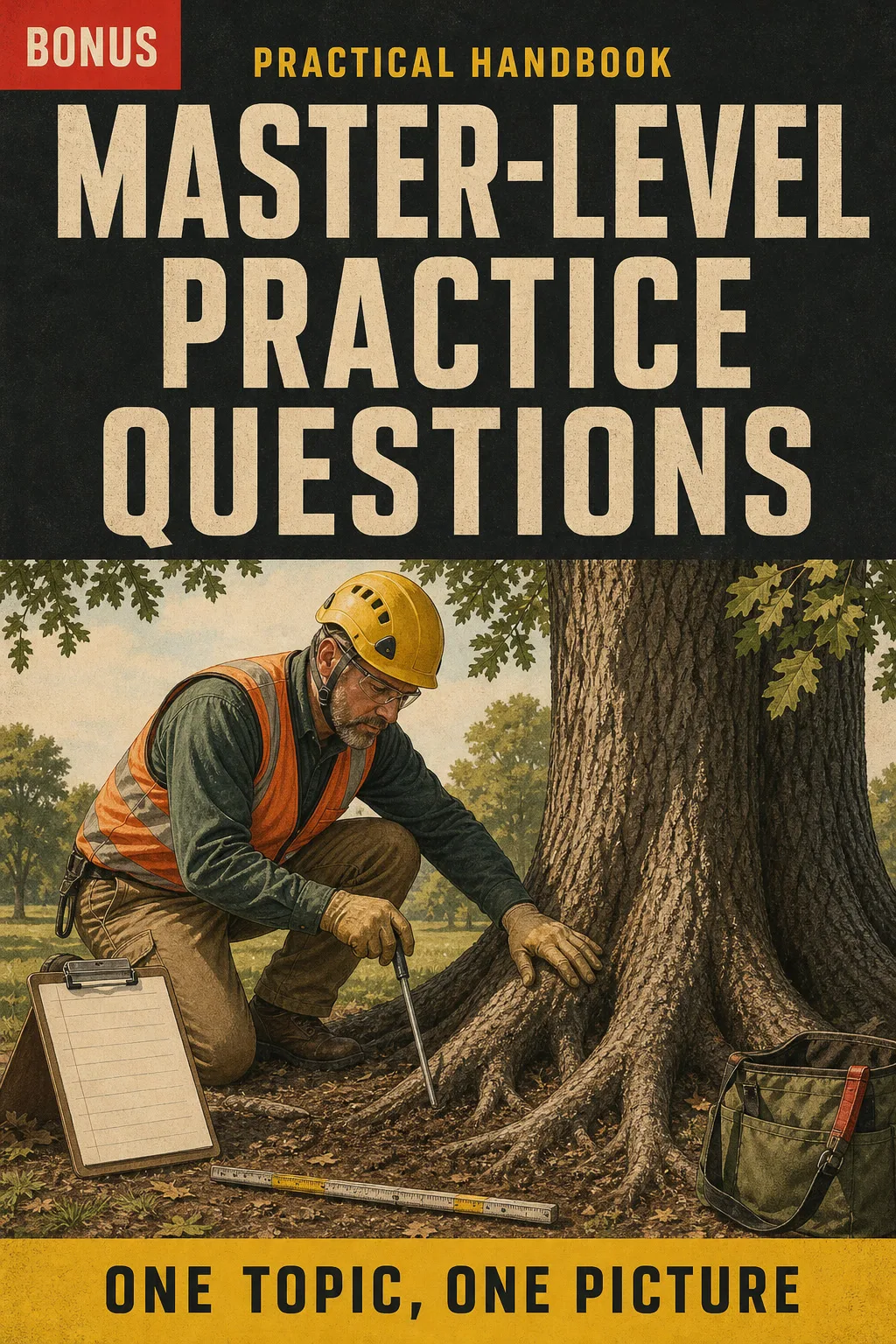
Master-Level Practice Questions

BONUS 1: «Master-Level Practice Questions»

Value on its own: US$ 17.90

Exam-style questions on every chapter, each answer explained and linked to the page it comes from, so you find your weak spots before exam day.

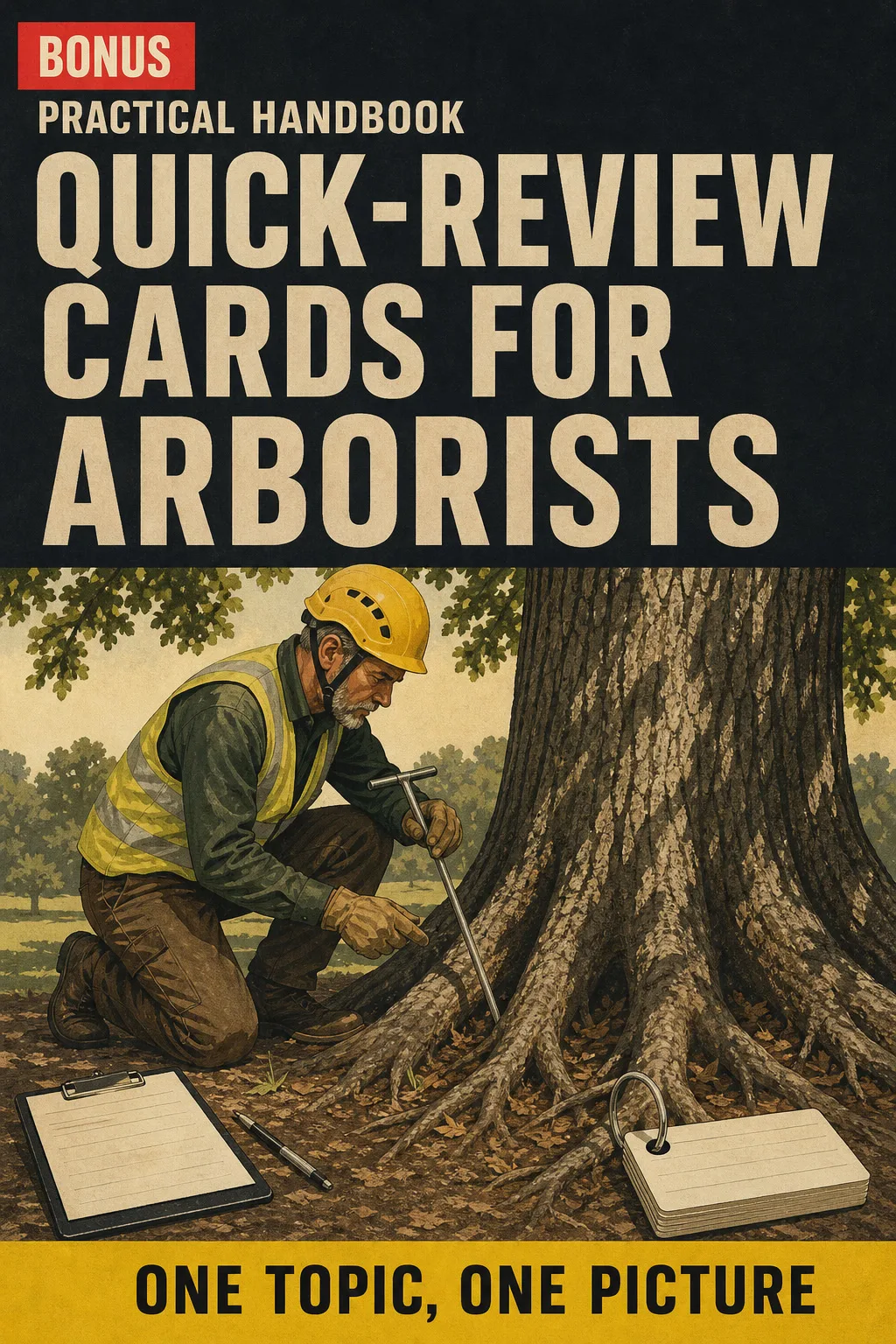
Quick-Review Cards for Arborists

BONUS 2: «Quick-Review Cards for Arborists»

Value on its own: US$ 14.90

The steps, numbers and definitions you need to have at hand, one card per topic, to review in ten minutes the night before or print and keep in the truck.

Arborist Illustrated: Master Level with 2 Free Books

  • Arborist Illustrated: Master Level: 69 illustrated pagesUS$ 63
  • BONUS 1: Master-Level Practice QuestionsUS$ 17.90
  • BONUS 2: Quick-Review Cards for ArboristsUS$ 14.90
  • High-resolution PDF to printIncluded
Total value US$ 95.80
YOUR PRICE:
US$ 27
You save US$ 68.80
YES, I WANT ARBORIST ILLUSTRATED: MASTER LEVEL FOR US$ 27

📄 This is a digital PDF book sent to your email: nothing is printed or shipped.

Secure purchaseEncrypted payment30-day guarantee

PDF by email: We email you Arborist Illustrated: Master Level as a PDF, together with the two free books. It's a single payment: no installments, no extra charges.

Who This Book Is For

You're studying for the master-level exam

You're studying for the master-level exam

Every topic on the outline is one drawn page, so you can review it in short sessions after work instead of fighting a whole chapter.

Your exam date is getting close

Your exam date is getting close

The exam-day review, the practice questions and the review cards show you where you're weak while there's still time to fix it.

You already consult or run a crew

You already consult or run a crew

Root zones, risk ratings, pruning specs and report sections, laid out so you can explain them to a client, a developer or the city.

Everything You Get Today

US$ 95.80US$ 27
YES, I WANT ARBORIST ILLUSTRATED: MASTER LEVEL FOR US$ 27

📄 This is a digital PDF book sent to your email: nothing is printed or shipped.

30DAYS
GUARANTEE

30-Day Guarantee

Try Arborist Illustrated: Master Level for 30 days, bonus books included.

We refund everything if the file won't open, if the book isn't what you see here, if you were charged twice or if the email doesn't arrive. Just email us.

You pay once. No subscriptions.

Frequently Asked Questions

Is it for me if I've been in the trade for 20 years?

Yes. It isn't a beginner book: it covers advanced topics like CODIT, soil chemistry, risk matrices, tree protection plans and spec writing. It puts in order and draws what you already half know from the field.

Where does the content come from?

From ANSI A300 (2023 edition) for pruning, soil, support, construction and risk, ANSI Z133 for safety, the ISA Best Management Practices and the published content outline of the Board Certified Master Arborist (BCMA) exam. Each page cites the standard and its edition, so you can check it against the current one.

Is it official material?

No. It's an independent study guide, not affiliated with ISA or any certifying body. It doesn't give you a certificate, a credential or CEUs: it's for studying and reviewing.

Does it replace the official reading list or a prep course?

No. It helps you review and organize the content; the official references and your field experience still come first.

Are the practice questions the real exam questions?

No. They're written for this book, in exam style, and each answer points to the page it comes from.

How do I get it?

The book and the 2 bonus books come as PDFs by email.

Do I have to pay every month?

No. It's a one-time payment.

Can I have it on paper?

Yes. The PDF prints well at home or at a print shop, so you can keep it in the truck.

How do refunds work?

You have 30 days. We refund everything if the file won't open, if the book isn't what you see on this page, if you were charged twice or if the email doesn't arrive: just email us.

Before You Close This Page

No more rereading chapters that don't stick.

CODIT, root zones and risk ratings: you see them drawn, and you've got it.

You walk into the exam knowing where everything is.

Drawings make studying faster.

The book is right below.

One-time payment: US$ 27 · Guarantee: 30 days · PDF by email

YES, I WANT ARBORIST ILLUSTRATED: MASTER LEVEL FOR US$ 27

📄 This is a digital PDF book sent to your email: nothing is printed or shipped.